
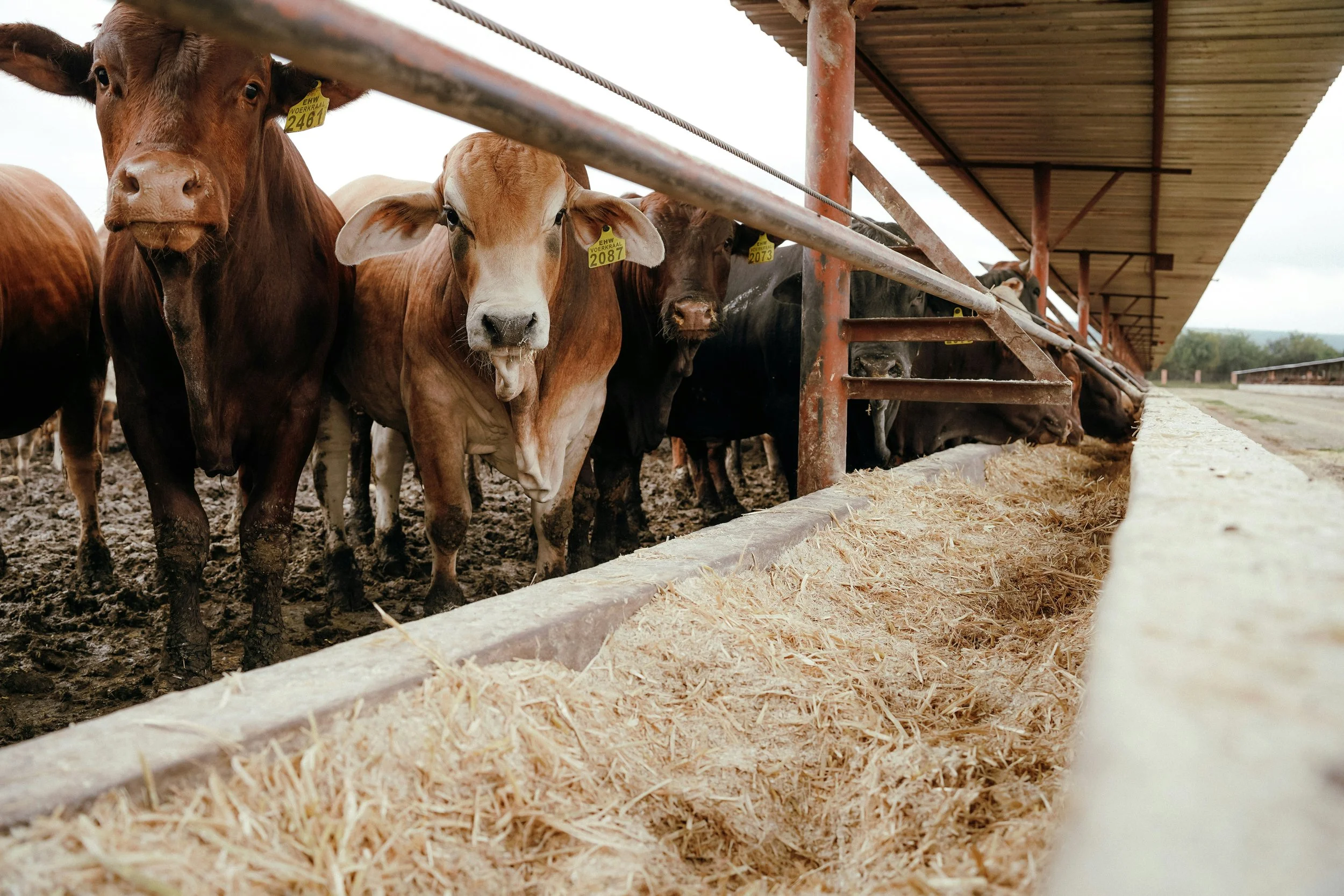
Photo by Marianne MacDonald
Corn is up. Hay is up. The herd is the smallest in 75 years. With feed this expensive, researchers are taking a closer look at where cattle lose energy, and a red seaweed from the Pacific is part of that research.
This fall, cattle producers across Kansas, Oklahoma, and Texas are working through one of the tightest operating environments in years. December corn futures hit $5.46/bu in early September (up 27% from their late June low) as drought trimmed yield estimates, and Southern Plains cash corn ran more than 50 cents over Omaha. By the end of summer, more than 80% of U.S. cattle inventory sat in abnormally dry or drought conditions, and hay in the Central and Northern Plains jumped $150–$200 a ton in roughly two months. Farm Credit’s Terrain team projects unhedged losses of $200–$250 a head on third-quarter fed cattle marketings.
At the same time, the U.S. herd sits at 86.2 million head (the smallest in 75 years) and USDA’s “Ranchers First” plan, announced August 31, is betting on heifer retention to rebuild it. New World screwworm cases in South Texas, a cautious reopening of Mexican cattle imports at Douglas, Arizona, and a federal push to bring in more lean beef trimmings have all added volatility to a market where every pound of feed counts.
Downstream, buyers are asking harder questions about how cattle are raised—from antibiotic stewardship (FDA’s latest Summary Report on Antimicrobials, released in December 2025, showed a 16% rise in sales of medically important antibiotics for food-producing animals from 2023 to 2024) to greenhouse gas emissions across the beef supply chain.
Put those together and a practical question comes into focus: where is energy being lost in the rumen, and what does the research say about it?
What the research is exploring
Methane is produced in the rumen by methanogenic archaea, and that process carries an energy cost: depending on the diet, ruminants can lose up to 12% of their gross energy intake as methane. Scientists have spent years studying naturally occurring compounds in the red seaweed Asparagopsis taxiformis (known in Hawaiʻi as limu kohu) that act on the enzymatic pathway methanogens use to produce methane.
One of the open questions is what happens to energy that isn’t lost as methane—whether, and under what conditions, it is redirected into productive pathways. Researchers, including at the University of California (2026), are still working through that question, and published results to date are mixed.
In high-forage systems, energy loss is a silent cost. Understanding where that energy goes is the first step.
About SeaGraze® Oil
SeaGraze® Oil is a shelf-stable oil derived from Asparagopsis taxiformis, developed by Hawaiʻi-based Symbrosia for confined feeding systems. It is being studied in formats designed to fit existing feeding operations, including:
Liquid supplement systems
Molasses blends
TMR rations
Drylot backgrounding
Feedlot finishing
Why this conversation is happening now
Three pressures are colliding across the cattle industry this fall. Drought and heat have pushed feed and hay costs sharply higher just as feeders face projected losses on fed cattle. A historically small herd, screwworm, and shifting import policy are keeping markets volatile. And packers, retailers, and sustainability programs are paying closer attention to how beef is produced.
Climate-smart agriculture is no longer a niche concept. For many operators, the question is less whether these programs are coming and more what the science will show and how results will be measured.
That’s why the research matters now. 🌊🐄
Following the science
Symbrosia shares research updates with producers, nutritionists, and scientists across the Plains.
